INDEX. The shooting of black powder cartridge rifles is a great challenge and one which has very few finite rules. It involves almost continual experimentation with old and new components and equipment. For short range hunting and target practice, simple and proven reloading methods will provide suitable ammunition and accuracy. For those who want to surpass that level, specialized and developed handloads will always produce a significant improvement, just as it does with reloading for modern smokeless powder arms.
Author: Research Press
Birth of a Big Gun (1908)
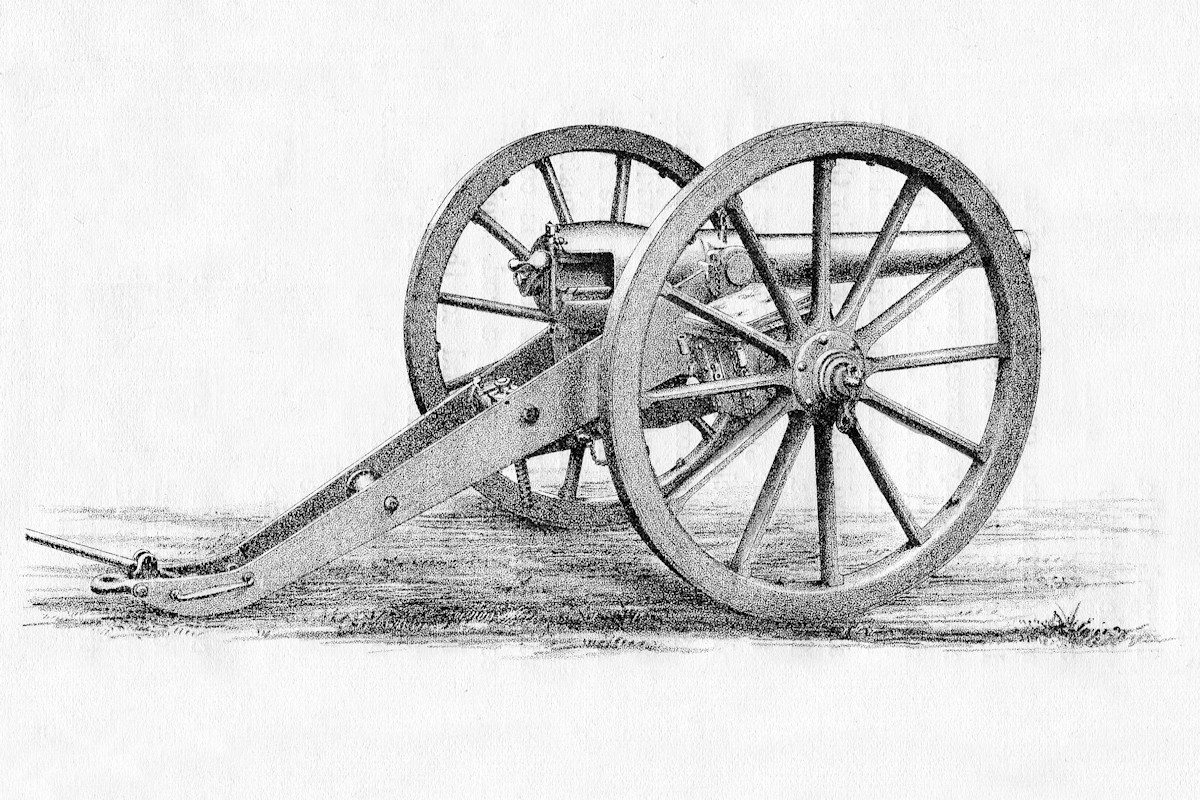
A new weapon is launched in the pre-WWI naval arms race. This striking film illustrates the processes in the casting and manufacture of a 12-inch, 50-calibre naval gun – the kind of gun that would be used on battleships between 1914 and 1918. It was filmed in early 1908 at the factory of Armstrong Whitworth & Co., based in Newcastle-on-Tyne.
Snider Cartridge Creaser
James Dixon & Sons, Cornish Place, Sheffield, manufactured a huge variety of implements for muzzle loading, pin fire and centre fire breech-loading arms. Included were cartridge creasers and this short article features that for the .577 cartridge.
Whitworth 2 cwt Deck Gun
This piece, one of a pair, was held by Royal Air Force Calshot until its closure in 1964. It was handed to the Royal Air Force Andover for display at Headquarters Maintenance Command. Whitworth, number 315, is now part of the Royal Armouries collection at Fort Nelson, UK.
Enfield Optics
Problems with open sights for the shooter past the first flush of youth. The available remedy is a convex spectacle lens which is only just strong enough to clarify the foresight. This produces the least fuzziness to the aiming mark but fuzzier it will certainly be. The rear sight will still be vague but slightly improved. In my case, was this imperfect compromise becoming so bad that sighting errors were causing the problems or had my bedding gone sour or what?
Euroarms Volunteer: Disassembly Assembly
When you first remove the barrel from the stock, what appears to be step one is to unscrew the tang/”breech plug” from the bolster. If you do that one then sees a recessed “plug” flat on two sides. We first tried to remove that with no success. I then ordered a parts diagram from Eurorarms – which showed the tang/breech plug, the bolster and the barrel. It did not show the threaded center that actually holds the bolster onto the barrel and into which the tang is screwed. This is the piece that actually has the chamber cut into it on one end and is solid on the other. We’ll call it the “chamber”.
The Back Position
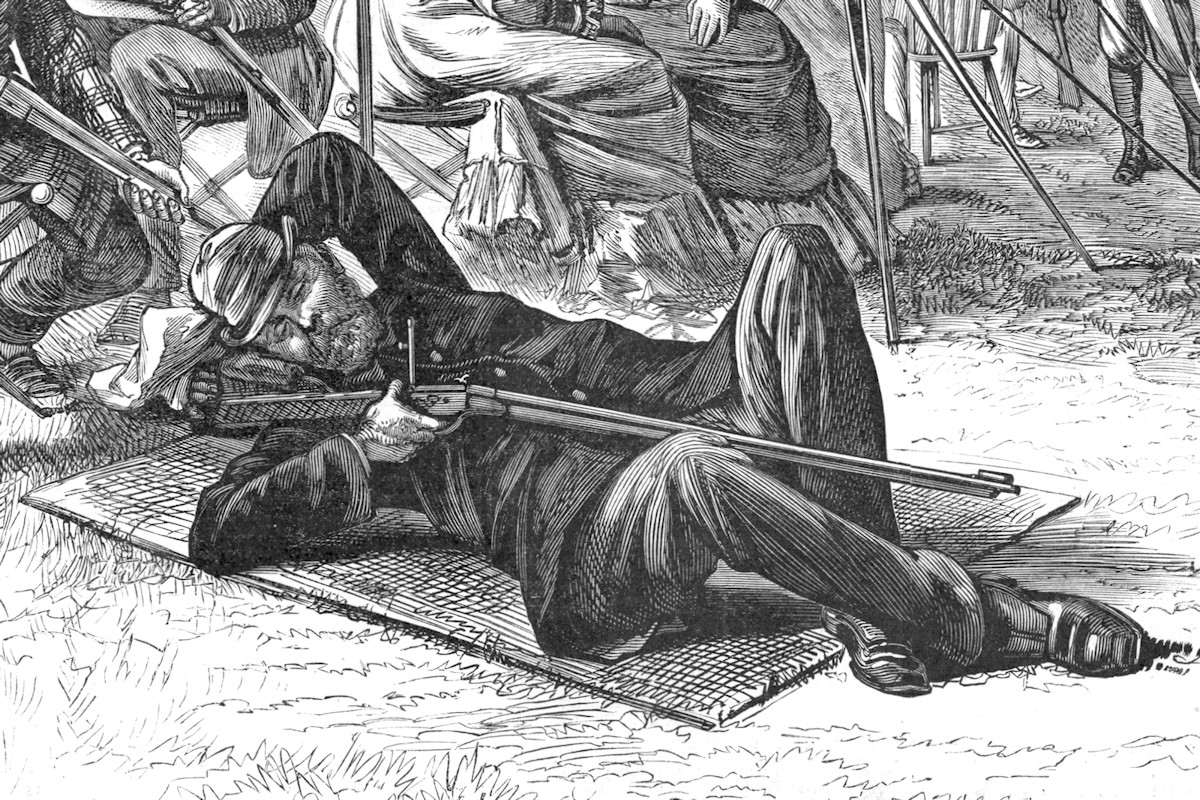
The back or supine position (sometimes referred to as the Creedmoor position) was known at the end of the 18th century. Captain Ferguson demonstrating his famous breech loading flintlock rifle at Woolwich in 1776 was noted to have “hit the bull’s eye at 100 yards, lying with his back on the ground.”

Whitworth Sporting Rifle with back action lock
A rare Whitworth sporting rifle. Caliber .451, but unusual with back action lock. Note the separate ram rod within the case – no provision for fitting to the rifle. One of a small batch made in 1859.
Whitworth Rack and Pinion Rearsight
A Manchester Ordnance Rifle Co. rack and pinion rearsight mounted on a ‘B’ series Whitworth military target rifle.
Record Breaking (Long Range) Scores
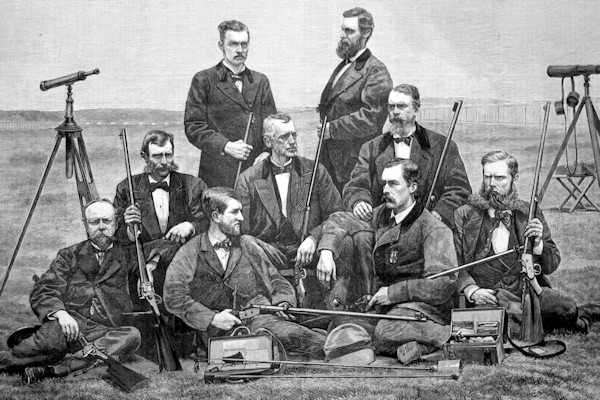
In 1878 Joseph Partello made the outstanding long range score of 224 x 225, shooting at 800, 900 and 1000 yards. Partello’s score was made at practice, experimenting having decided to change the method of loading the cartridges for his Remington rifle. However, and irrespective of Partello’s obituary statement in 1934 that his record score has “existed since 1878”, it was equalled by others.
Drams or Drachms?
Problems in the measurement of gun powder charges resulting from the use of different terminologies. De Witt Bailey and Bill Curtis investigated a wide variety of authors from Benjamin Robins in 1742 to Sir Henry Halford in 1888, with a view to finding out if these writers meant what they said. The basic conclusion was that while most did, for a certain period in the early 19th Century, a number became involved in the perpetuation of what appears to have begun as an incorrect translation of a French measure late in the 18th Century.

Guns and Steel, 1873
‘Miscellaneous Papers on Mechanical Subjects | Guns and Steel’ by Sir Joseph Whitworth, Bart., was published in London by Longmans, Green Reader, & Dyer in 1873. The text reproduced here is from Chapter II and concerns Whitworth’s involvement in rifle design. The remainder of the work concerns artillery and Whitworth’s ‘fluid-compressed steel.’