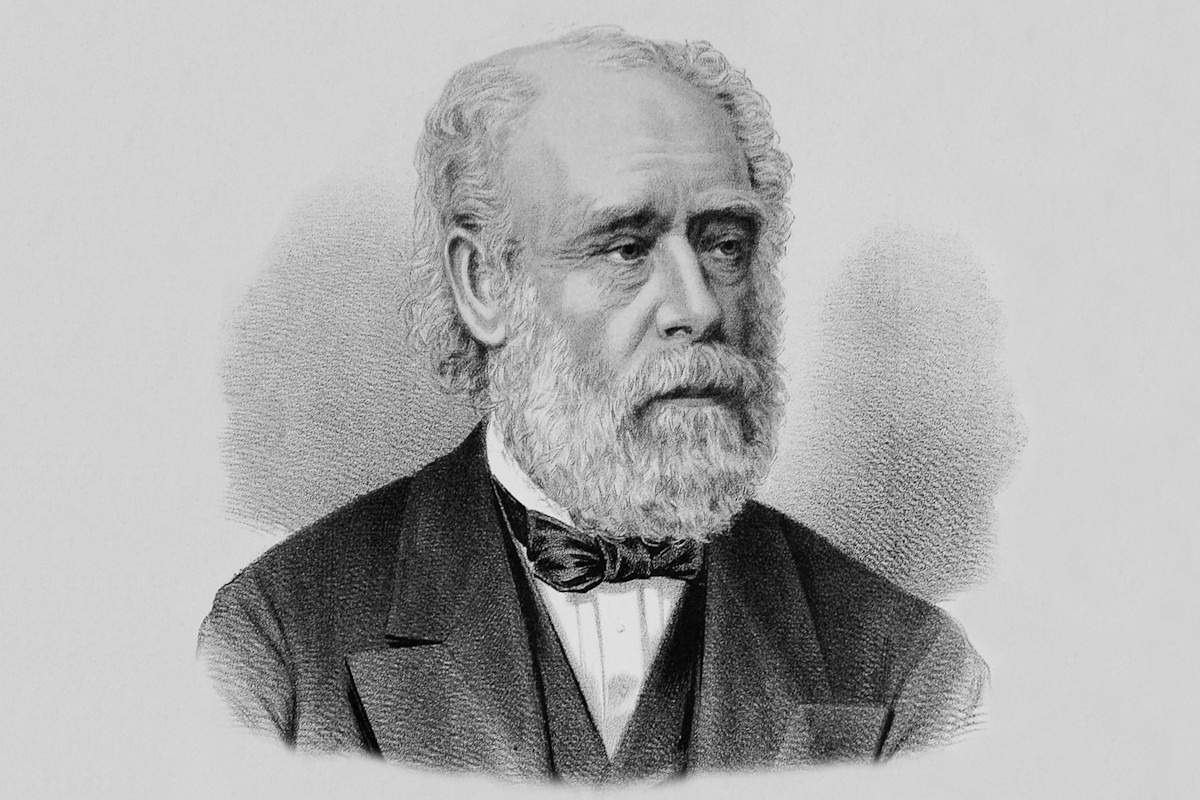
‘Miscellaneous Papers on Mechanical Subjects | Guns and Steel’ by Sir Joseph Whitworth, Bart., was published in London by Longmans, Green Reader, & Dyer in 1873. The text reproduced here is from Chapter II and concerns Whitworth’s involvement in rifle design. The remainder of the work concerns artillery and Whitworth’s ‘fluid-compressed steel.’
Author: Research Press
Eley’s Patent Wire Cartridge
The term ‘Cartridge’ in the context of the muzzle loading era did not always mean ‘a complete round with powder’. In shotgun terms, it meant a package containing the shot charge and possibly the wadding which could be loaded intact onto the powder charge already in the barrel.
Rifled Small Arms
A letter to The Times by Joseph Whitworth; “Sir, Permit me to make an appeal through your columns against the arming of our troops and Volunteers with short-range rifles, whether of the Snider-Enfield or any other pattern. Other nations are rapidly abandoning their use, and are arming their troops with long-range rifles. The supply of the more powerful weapon to our own troops has already been too long delayed…”
Whitworth: Rifle No. B143
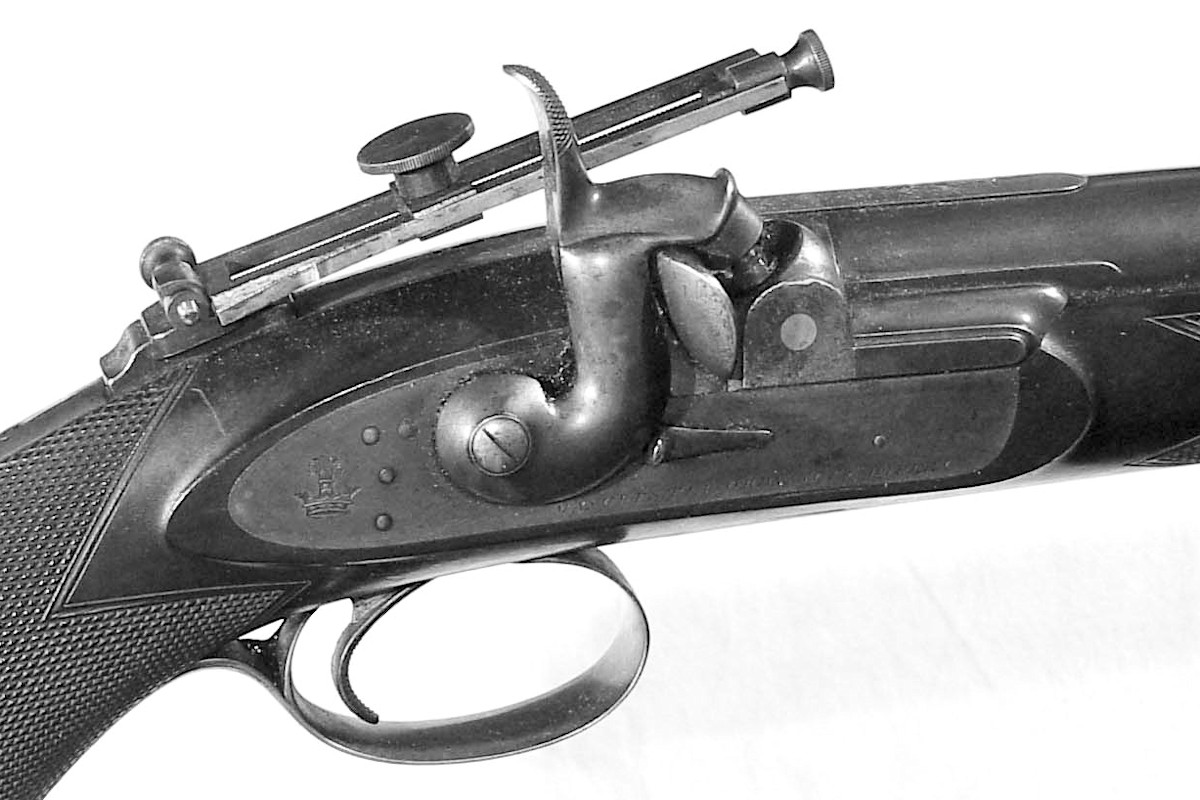
Whitworth military target rifle no. B143. Excellent bore with hexagonal rifling, strong blue finish and marked Whitworth patent with British proofs (52 bore).
Whitworth Rifle Warnings
This information is the result of Bill Curtis and De Witt Bailey research concerning original Whitworth rifles. Warning! – The Whitworth Research Project has identified problems with several rifles that have appeared on the open market from time to time. See notes below regarding the following original Whitworth rifles; numbers 449, B376, B678, C575.
Rifle Volunteers vs National Guard (1882 & 1883)
A shooting competition between the Rifle Volunteers of Great Britain and the National Guard of America was agreed for 1882. On 14 and 15 September the teams of twelve met at Creedmoor in the USA. The match was fired at 200, 500 and 600 yards on the first day, and at 800, 900 and 1000 yards on the second. In 1883 the American National Guard team had a return match against the British Volunteers at Wimbledon, England, on 20 and 21 July. The rifles used were of military pattern, although not necessarily one authorised for service. Each man fired seven shots at each distance, and no cleaning between shots was permitted.
Hex Bore – The Whitworth Research Project
INDEX. ‘Hex Bore’ is the Whitworth Research Project for the study of Whitworth rifles and artillery. Whitworth’s experiments revolutionised rifle design.
Whitworth Database Updates – 2021
Whitworth Research Project – database management summary 2021.
The Long Enfield 1853
Target shooting by Rifle Volunteers in the National Rifle Association (NRA) matches was primarily with their arm of issue, which in the 1860s was the Pattern 1853 Enfield rifle. Following enquires to the NRA, in April 1861 Captain Edmond H. St. John-Mildmay, the Secretary, sought a ‘definition’ of the rifle. He wrote to Major-General Charles Hay, the Commandant and Inspector-General of Musketry, at the School of Musketry, Hythe (1853-1867). Hay responded and the NRA distributed the correspondence in May 1861 which was published in numerous newspapers of the time. Mildmay’s brief covering note to the newspaper editors, and Hay’s definition follow.
War Department Notes
In the mid 1860’s a fortunate event occurred, the vast majority of the activities of the Ordnance Department of the British Empire was captured on paper. That is to say that an immense amount of information in the form of written descriptions, original drawings, official printed reports, circulars, proformas & tables etc were bound together in the shape of 5 handsome leather covered volumes.
Military Percussion Caps
Arthur B. Hawes in his ‘Rifle Ammunition’ (1859) describes the manufacture of the military percussion cap, his notes also including information on packing the finished caps. In 1858 British military percussion caps were issued in packs of 75 along with 60 cartridges. That year an additional 20 Eley waterproof caps were also issued.
Enfield Paper Cartridges
For today’s researcher into Enfield ammunition, the definitive reference is “Rifle Ammunition. Being Notes on the Manufactures connected therewith as conducted in The Royal Arsenal, Woolwich” by Arthur B. Hawes, Captain (r.h.p.), Bengal Army and published in London, 1859. Hawes writes in his introduction: “These notes, intended at first only for myself, were, I am happy so say, useful to others; and from that reason more than any other, I am induced now to offer them, imperfect as they are, for the perusal of all who feel interested in the preparation of ammunition of different descriptions, with the exterior of which all soldiers are so familiar.”