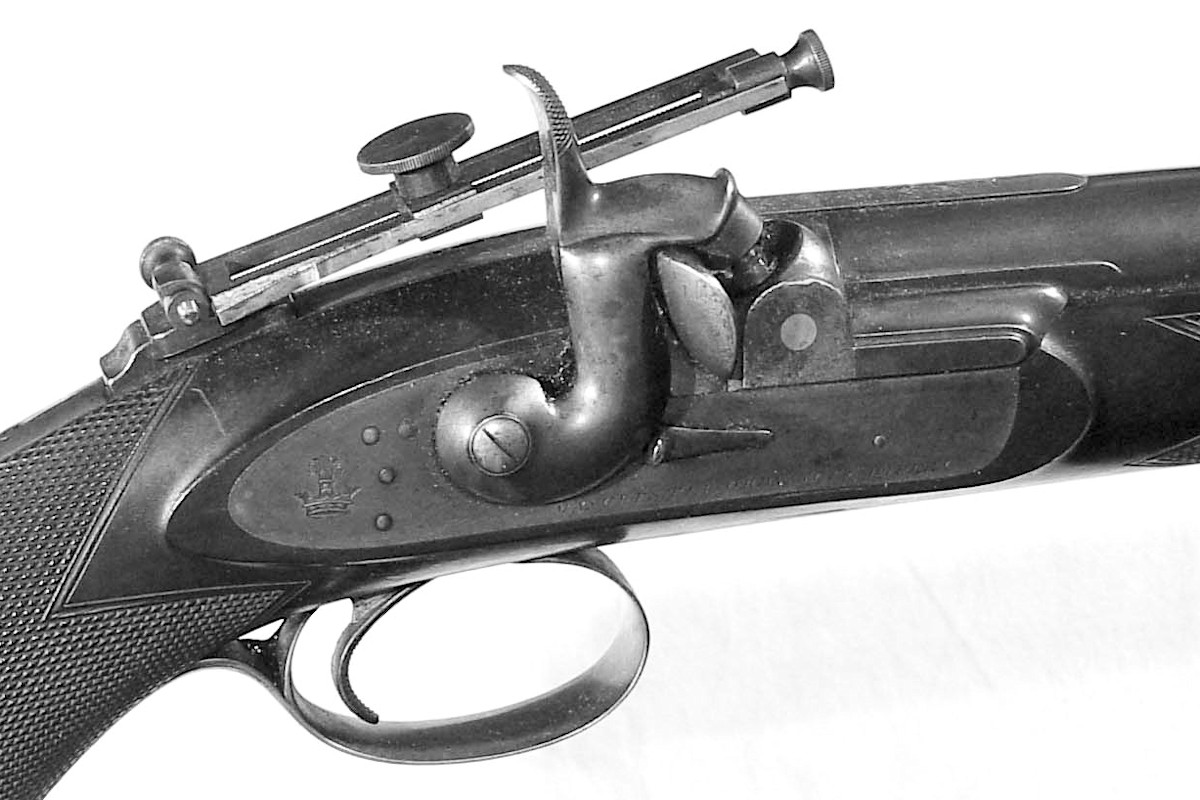
Wigan Volunteer Rifles were formed in January 1860, and were the 21st Corps of Lancashire Rifle Volunteers. Their first rifle contest commenced on Thursday 29 November 1860 at Wigan practice ground, with a moderate attendance of spectators. Henry Woods MP presented a Whitworth military target rifle as a prize.
Category: Research
Research Press is pleased to support those studying aspects of firearms or associated history. News and progress updates are welcomed if you have a research project with a view to publishing the results.
Browse the latest posts below, or see:
Birth of a Big Gun (1908)
A new weapon is launched in the pre-WWI naval arms race. This striking film illustrates the processes in the casting and manufacture of a 12-inch, 50-calibre naval gun – the kind of gun that would be used on battleships between 1914 and 1918. It was filmed in early 1908 at the factory of Armstrong Whitworth & Co., based in Newcastle-on-Tyne.
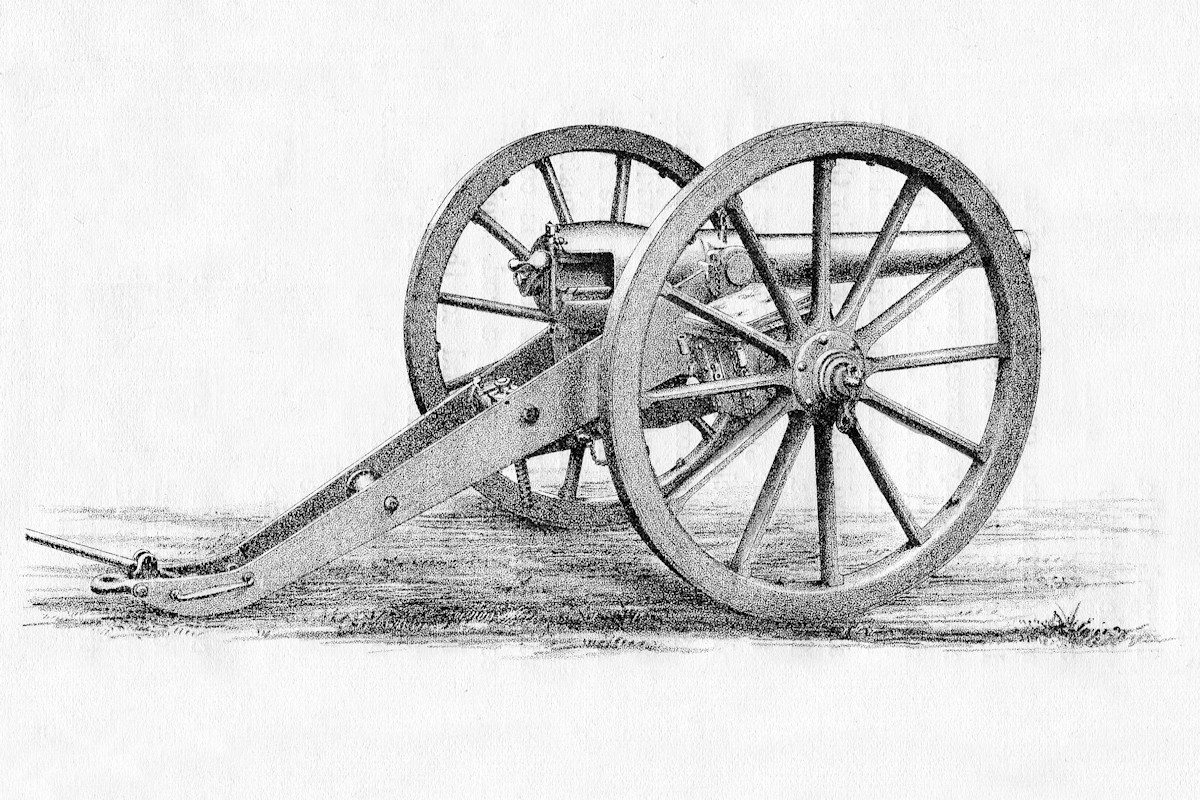
Whitworth 2 cwt Deck Gun
This piece, one of a pair, was held by Royal Air Force Calshot until its closure in 1964. It was handed to the Royal Air Force Andover for display at Headquarters Maintenance Command. Whitworth, number 315, is now part of the Royal Armouries collection at Fort Nelson, UK.
Whitworth Sporting Rifle with back action lock
A rare Whitworth sporting rifle. Caliber .451, but unusual with back action lock. Note the separate ram rod within the case – no provision for fitting to the rifle. One of a small batch made in 1859.
Whitworth Rack and Pinion Rearsight
A Manchester Ordnance Rifle Co. rack and pinion rearsight mounted on a ‘B’ series Whitworth military target rifle.

Guns and Steel, 1873
‘Miscellaneous Papers on Mechanical Subjects | Guns and Steel’ by Sir Joseph Whitworth, Bart., was published in London by Longmans, Green Reader, & Dyer in 1873. The text reproduced here is from Chapter II and concerns Whitworth’s involvement in rifle design. The remainder of the work concerns artillery and Whitworth’s ‘fluid-compressed steel.’
Rifled Small Arms
A letter to The Times by Joseph Whitworth; “Sir, Permit me to make an appeal through your columns against the arming of our troops and Volunteers with short-range rifles, whether of the Snider-Enfield or any other pattern. Other nations are rapidly abandoning their use, and are arming their troops with long-range rifles. The supply of the more powerful weapon to our own troops has already been too long delayed…”
Whitworth: Rifle No. B143
Whitworth military target rifle no. B143. Excellent bore with hexagonal rifling, strong blue finish and marked Whitworth patent with British proofs (52 bore).
Whitworth Rifle Warnings
This information is the result of Bill Curtis and De Witt Bailey research concerning original Whitworth rifles. Warning! – The Whitworth Research Project has identified problems with several rifles that have appeared on the open market from time to time. See notes below regarding the following original Whitworth rifles; numbers 449, B376, B678, C575.
Hex Bore – The Whitworth Research Project
INDEX. ‘Hex Bore’ is the Whitworth Research Project for the study of Whitworth rifles and artillery. Whitworth’s experiments revolutionised rifle design.
Whitworth Database Updates – 2021
Whitworth Research Project – database management summary 2021.
Replacing Whitworth Barrels in the 19thC
The Whitworth rifle with its hexagonal bore set new standards in accuracy and in the early 1860s was used by keen long range riflemen in target shooting competition. By the late 1860s it was however being supplanted by other gunmakers using shallow groove rifling and hardened cylindrical bullets – notably Metford and Rigby. It is not uncommon to find Whitworth stock/lock fitted with such barrels as 19thC riflemen ‘upgraded’ their rifles, and over the years the original Whitworth barrel becomes separated.