This biography of Joshua Shaw, Artist and Inventor, from 1869 also features the early history of the copper percussion cap. Many people claimed invention of this system but it was such an obvious development from the patch lock that it must have occurred to a good many people almost simultaneously.
Archives
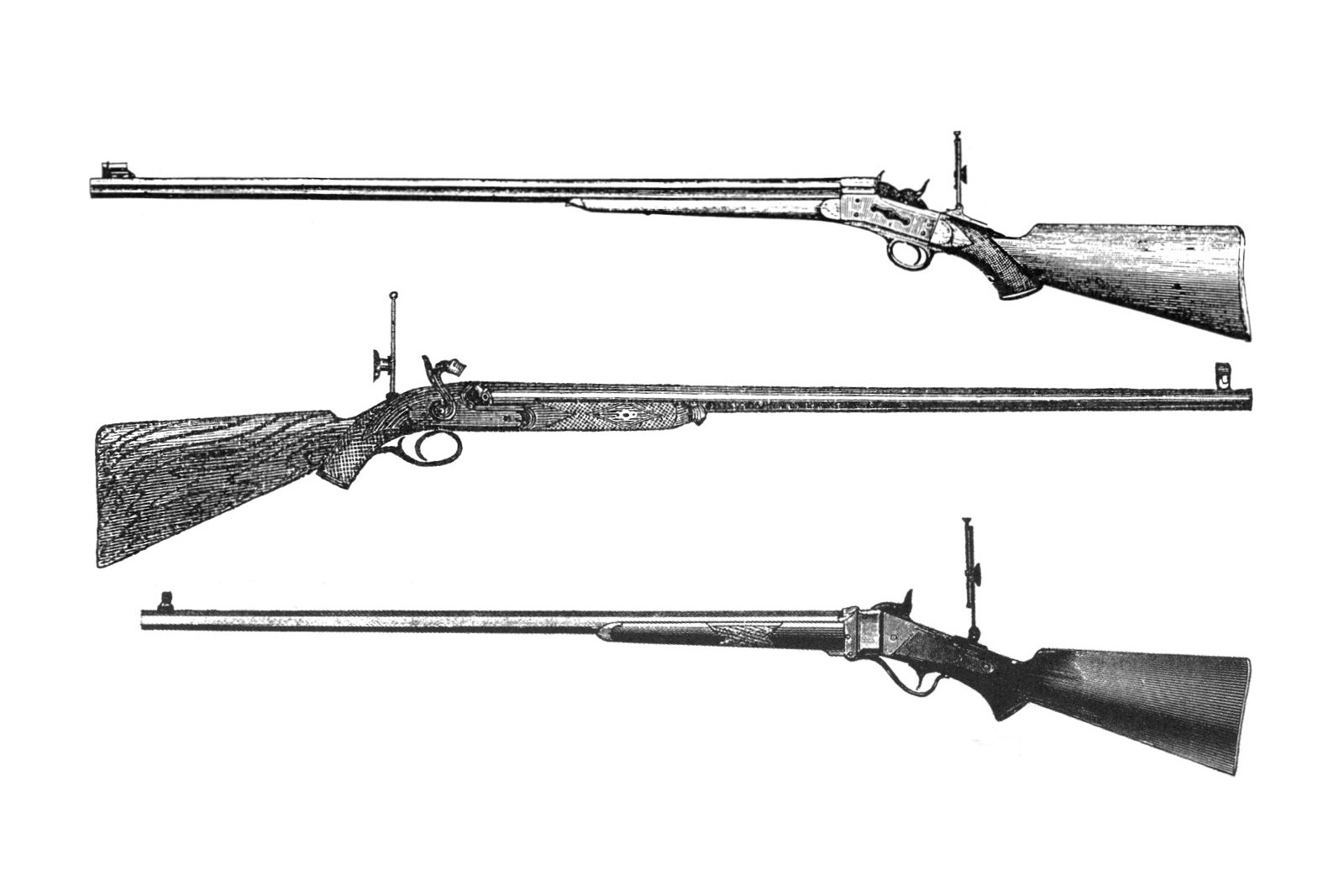
American Rifles, 1877
Following defeat of the British rifle team by American riflemen at Creedmoor, USA, in September 1877, there was debate about the reasons for defeat and this discussion included talk of the rifles used. Here Irish gunmaker John Rigby offers his observation on Remington and Sharps Creedmoor rifles.
The 1862 London International Exhibition
The International Exhibition of 1862, successor to the 1851 Great Exhibition, was held at London 1 May to 1 November. Featuring over 28,000 exhibitors from 36 countries, it represented a wide range of industry, technology, and the arts and attracted about 6.1 million visitors. Amongst the arms and ordnance exhibited were a number of long range rifles, which were described, briefly, by John Rigby for the Practical Mechanic’s Journal.
Short Barrel and Long Range
Mr. Leonard Geiger, the inventor of the Remington gun, had a new weapon on the range for the purpose of testing its accuracy. This rifle, called by Mr. Geiger, “a son of a gun,” has the stock and breech mechanism of the Remington long-range rifle, without the pistol grip. Its barrel is only twenty-six inches long, but very thick, the weapon weighing slightly over ten pounds.
The Fraser Rifle
Towards the end of 1880 an effort was made to revive the drooping spirits of the few Scotchmen who loved the small-bore rifle. It was unanimously agreed that there was no use to face targets in the Elcho match unless all the men were armed with breech-loaders, and used the back position; and the dilemma was what rifle were they to use. At this juncture Messrs. D. & J. Fraser, of Edinburgh, stepped forward to clear the air.
The Creedmoor Rifle, 1876
“Forest and Stream” published a ‘Hand-Book for Riflemen’ in 1876. The Hand-Book is authored by Major George C. Starr, Secretary of the American Rifle Association. The author of the ‘Hand-Book’ cites Wingates ‘Manual for Rifle Practice’ as a source for “valuable hints and facts”.
Creedmoor Rifles, 1873
In October 1873 a Forest & Stream reporter at Creedmoor observed that “at the longer ranges the qualities of the finer rifles of course gave them greater advantages. This match also demonstrated the great improvement that had been made in breech-loaders. The score at 800 and 1,000 yards showed but little difference between the muzzle-loading Rigby and Metford rifles, and the breech-loading Remington, Sharpe, and Maynard.”
Daniel Fraser: A Brief Introduction
Around 1873 Daniel set up business in Edinburgh. Initially at Greenside Place, within a year he moved to Leith Walk where he remained until 1878. At this time he went into business with his brother John, forming D. & J. Fraser and moving the business to new premises on Leith Street Terrace.
Daniel Fraser, Edinburgh, Scotland
INDEX. D. & J. Fraser manufactured a falling block breech loading rifle for Match and Military Breech Loader competition.
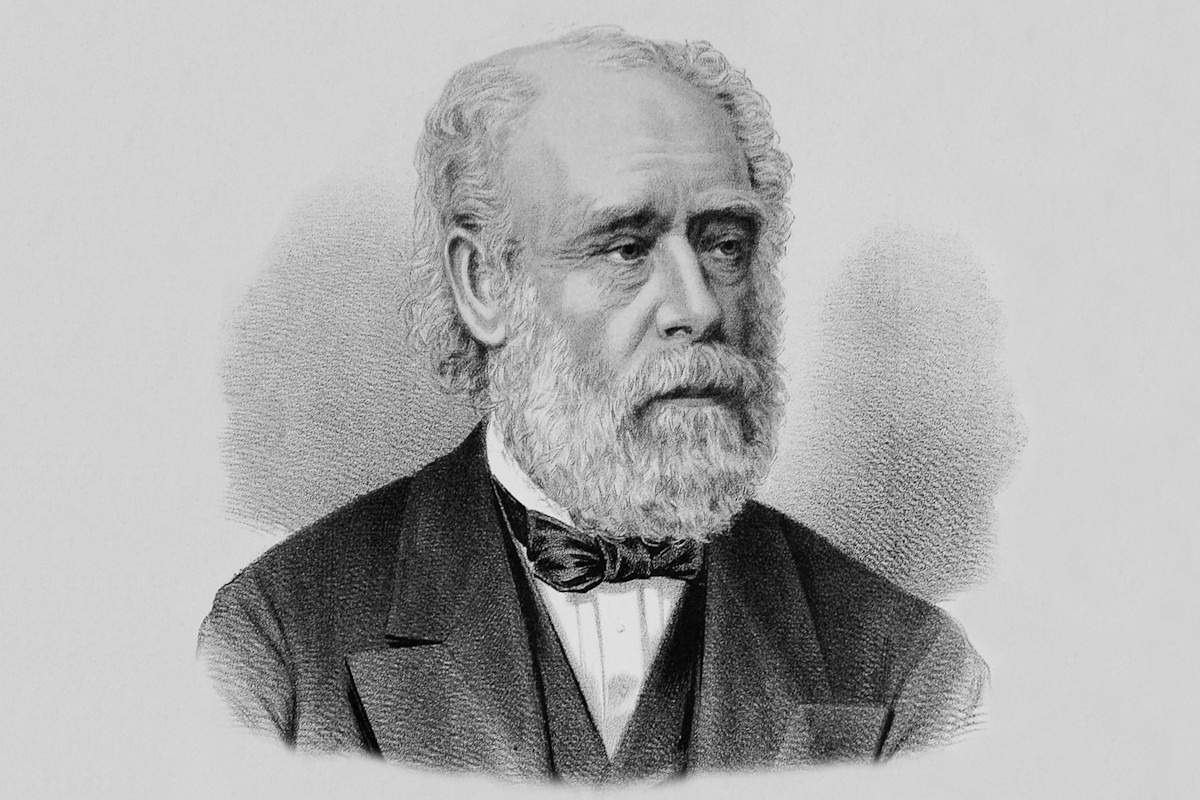
Monument To Sir Joseph Whitworth
A handsome monument from the inhabitants of Darleydale, Derbyshire, was presented to Lady Whitworth, in token of the esteem felt for the memory of the late Sir Joseph Whitworth, Bart. The monument occupies a space in the centre of the grounds at the Whitworth Institute, and has an imposing appearance, the base being formed of one block of Stancliffe stone.
The Grave of Sir Joseph Whitworth
Sir Joseph Whitworth died on the evening of Saturday 22 January 1887, aged 83, at Monte Carlo. He was buried on Wednesday 2 February 1887 in the churchyard of the 12th century St Helen’s church at Darley Dale, Derbyshire.
The Rigby Rifle, 1869
This short description text is extracted from “Handbook of Rifle Shooting” by Alex Lord Russell (1869, Toronto). It provides contemporary description of the late form of Rigby muzzle loading match rifle.